

MLK’s Vision for Fair Housing
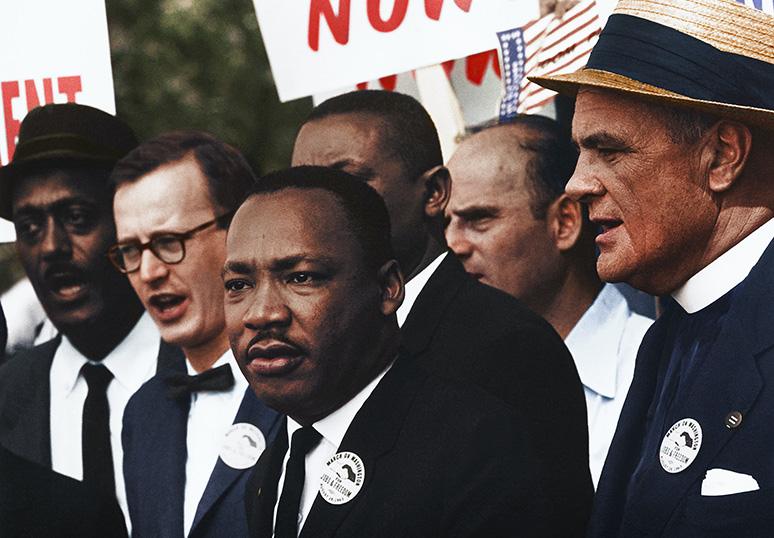
Each year, the third Monday in January invites us to reflect on the life and legacy of Dr. Martin Luther King Jr. MLK Day is a reminder that Dr. King’s values call for year-round action. Dr. King’s call to justice, service, and collective responsibility continues to challenge us to examine how we care for our communities and one another.
While Dr. King is best known as a leader of the Civil Rights Movement, his work to advance fair and equitable housing is less widely recognized. Throughout much of the 20th century, racial segregation was enforced through law and policy, subjecting Black Americans to discrimination, intimidation, and violence that often resulted in substandard housing conditions.
In his book The Color of Law, author Richard Rothstein examines how local, state, and federal housing policies created and reinforced segregation. The Federal Housing Administration, established in 1934, refused to insure mortgages in or near Black neighborhoods, a practice known as “redlining,” while simultaneously subsidizing white only suburban developments. These policies shaped generations of inequality.
Dr. King understood that housing justice was central to racial equity. From 1965 to 1966, he co-led the Chicago Freedom Movement, which challenged discrimination in employment, education, and housing in one of the most residentially segregated cities in the country. The movement demanded “open housing” so Black families could pursue homeownership without barriers.
That advocacy helped lay the groundwork for the Fair Housing Act of 1968, signed just one week after Dr. King’s assassination. This crucial legislation prohibited discrimination in the sale and rental of housing. Although over 50 years have passed since the signing of the Fair Housing Act, we still have a long way to go in realizing Dr. King’s vision of fair housing for all.
In Milwaukee, the most recently published U.S. Census data shows that 55.8% of white households own their homes, compared to 37.5% of Hispanic households, and just 27% of Black households. The Community Development Alliance (CDA) has identified the need for 32,000 additional Black and Latino homeowners to address this racial homeownership gap. Milwaukee Habitat, alongside other housing organizations, are partnering with the CDA and working collectively to help make that goal a reality. While Habitat qualifies based on income, regardless of applicants’ race, color, or national origin (in accordance with the Fair Housing Act), the overwhelming majority of families who’ve purchased Milwaukee Habitat homes are Black.
Aligned with the CDA’s Collective Affordable Housing Plan, Milwaukee Habitat is transforming formerly city owned vacant lots into new, owner-occupied homes in neighborhoods like Midtown, Harambee, Lindsay Heights, and King Park. In 2025, we raised the walls of 34 affordable homes and are on our way to build 40 homes per year by 2028.
We will need to work together to address our city’s racial homeownership disparity, acknowledging it’s no small order. In doing so, we recall the words of Dr. King:
“Human progress is neither automatic nor inevitable… Every step toward the goal of justice requires sacrifice, suffering, and struggle; the tireless exertions and passionate concern of dedicated individuals.”

GIVE TODAY

FIND OUT MORE

SCHEDULE A PICKUP ONLINE